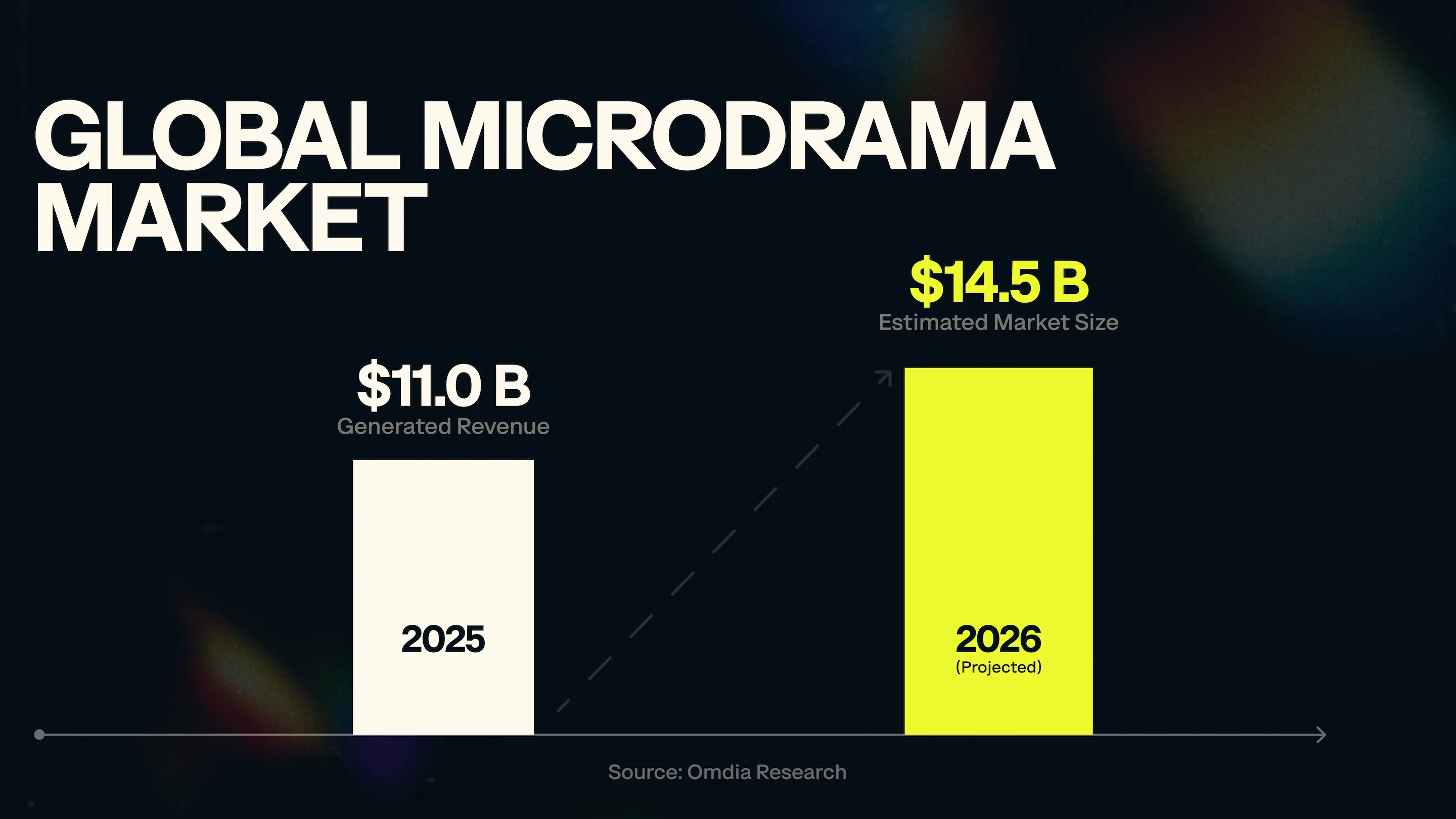
The entertainment industry is experiencing a massive structural shift. Audiences are no longer just passive viewers; they are attention-renegades. They consume stories on the move, between tasks, and strictly on their smartphones. According to comprehensive market reports by eMarketer, this shift in mobile viewing behavior has turned what used to be a social media gimmick into a multi-billion-dollar economy: the global short drama market.
Data compiled by behavioral research firms like UXmatters reveals that users spend over 90% of their smartphone time holding their devices vertically, refusing to rotate their screens even for video content. This behavioral reality has forced a complete redesign of narrative structures. The rapid rise of dedicated vertical streaming platforms like ReelShort, DramaBox, and ShortTV proves that short-form episodic content is now a standalone entertainment category.
At AMO Pictures, we see this transformation firsthand. The market has grown beyond simple social media clips. Today, as documented in recent digital media audits, it is driven by professional production values, complex character arcs, and sophisticated monetization models. To stay ahead, platforms and creators must understand the core shifts defining the future of vertical drama.
Quick Answer
The future of vertical drama is defined by hyper-optimized, high-production-value content built specifically for the smartphone screen. The dominant vertical drama market trends outlined in recent Sensor Tower tech evaluations show a transition from low-budget experiments to premium, studio-backed platform-specific content. The industry is moving toward mobile-first storytelling, highly condensed short episodes with aggressive pacing, and aggressive global localization. Success in this space requires a data-driven approach to production, where audience retention metrics directly shape the script, while professional full-cycle production studios ensure a scalable, predictable content pipeline.
Why Vertical Drama Is Growing
The exponential vertical drama industry growth is the direct result of a collision between shifting human attention spans and micro-transaction mechanics. Traditional streaming networks require a time commitment that modern mobile users often cannot afford. Vertical mini-series solve this problem by fitting narrative fiction into 2-minute gaps throughout the day.
Analysis by mobile economy platforms like DataEye highlights several key factors driving this rapid market expansion:
Smartphone-First Consumption. Gen Z and Millennial audiences view the phone as their primary screen. Audience polls by eMarketer show that desktop and TV consumption for scripted fiction is steadily losing ground to attention-driven content.
The Power of Micro-Sessions. Viewers watch content during commutes, in lines, or during work breaks. Short, serialized narratives match these brief usage windows perfectly.
Dedicated Ecosystems. Specialized drama apps have decoupled fiction from social algorithms. Platforms like ReelShort and DramaBox have built independent distribution networks that don't rely on TikTok or YouTube Shorts monetization.
Effective Vertical Drama Monetization. Financial tracking by Sensor Tower shows that viewers routinely pay small amounts ($0.10 to $0.50) to bypass cliffhangers. This micro-transaction setup generates massive average revenue per user (ARPU) compared to flat-rate monthly subscriptions.
Top 10 Vertical Drama and Short-Form Fiction Trends
1. Mobile-First Storytelling Becomes the Standard
We are moving away from cropped widescreen footage. True mobile-first storytelling means the entire visual and narrative language is designed for the 9:16 aspect ratio from day one. In 9:16 storytelling, the camera placement, blocking, and set design are entirely different from traditional cinematography.
The pioneering smartphone interaction studies by UXmatters established that the vast majority of mobile interactions are one-handed and vertical. Because the screen space is narrow, two-shots and wide landscapes lose their power. Instead, the visual language relies on tight close-ups, deep vertical layering, and intense emotional expressions. Directors must place elements vertically within the frame rather than horizontally.
Because the screen is small, micro-expressions carry the plot. A slight smirk or a single tear drives the narrative forward faster than a grand cinematic backdrop. At AMO Pictures, we build our visual composition around this tight frame, ensuring that every shot maximizes the limited mobile screen real estate without cluttering the viewer's field of vision.
2. Episodes Are Becoming Shorter and More Hook-Driven
The length of an episode in this space is shrinking, while the narrative density is exploding. Production benchmarks published in short-form industry guides confirm that the standard for short episodes has stabilized between 60 to 90 seconds. Within this tight window, creators must deliver a complete narrative beat, an emotional shift, and a reason to keep watching.
This environment requires strict hook-driven storytelling. The first three seconds of the very first episode must capture the user before they swipe away. There is no room for establishing shots, slow character introductions, or ambient world-building.
To put this into perspective, a traditional script structure typically moves from a 10-minute setup to a 15-minute inciting incident, slowly building toward a 30-minute rising action. In sharp contrast, a vertical drama script operates on a hyper-condensed timeline where a 3-second hook is immediately followed by a 15-second inciting incident, leading to a micro-climax at 45 seconds, and culminating in a hard cliffhanger at the 85-second mark.
Every scene must focus on high-stakes conflict. The end of every single episode requires a sharp cliffhanger that leverages human curiosity to drive immediate monetization.
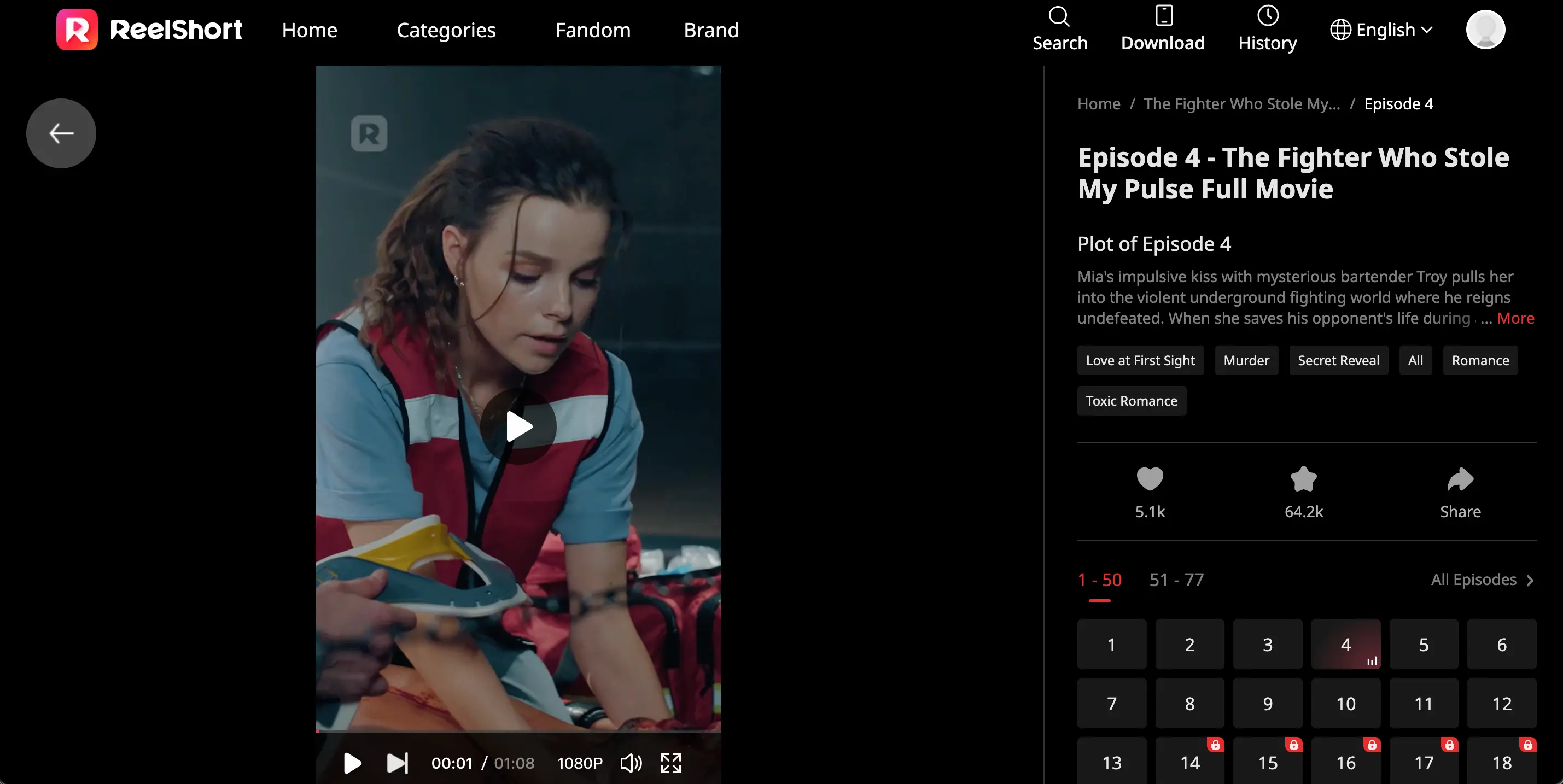
3. Micro Drama Series Are Expanding Globally
What began as a localized format in Asian markets has evolved into a global phenomenon. The micro drama series is now a cross-border product, but expansion requires major changes in tone, casting, and narrative themes.
According to global entertainment whitepapers from Sensor Tower, Western audiences demand higher technical quality and specific structural variations compared to early iterations of the format. The market is moving away from low-cost, volume-heavy production toward highly structured seasons of 60 to 100 episodes per title.
The expansion is also visible in how these series are funded and bundled. Producers are no longer shooting standalone clips; they are commissioning massive content packages designed to capture international audiences across North America, Europe, and Latin America simultaneously.
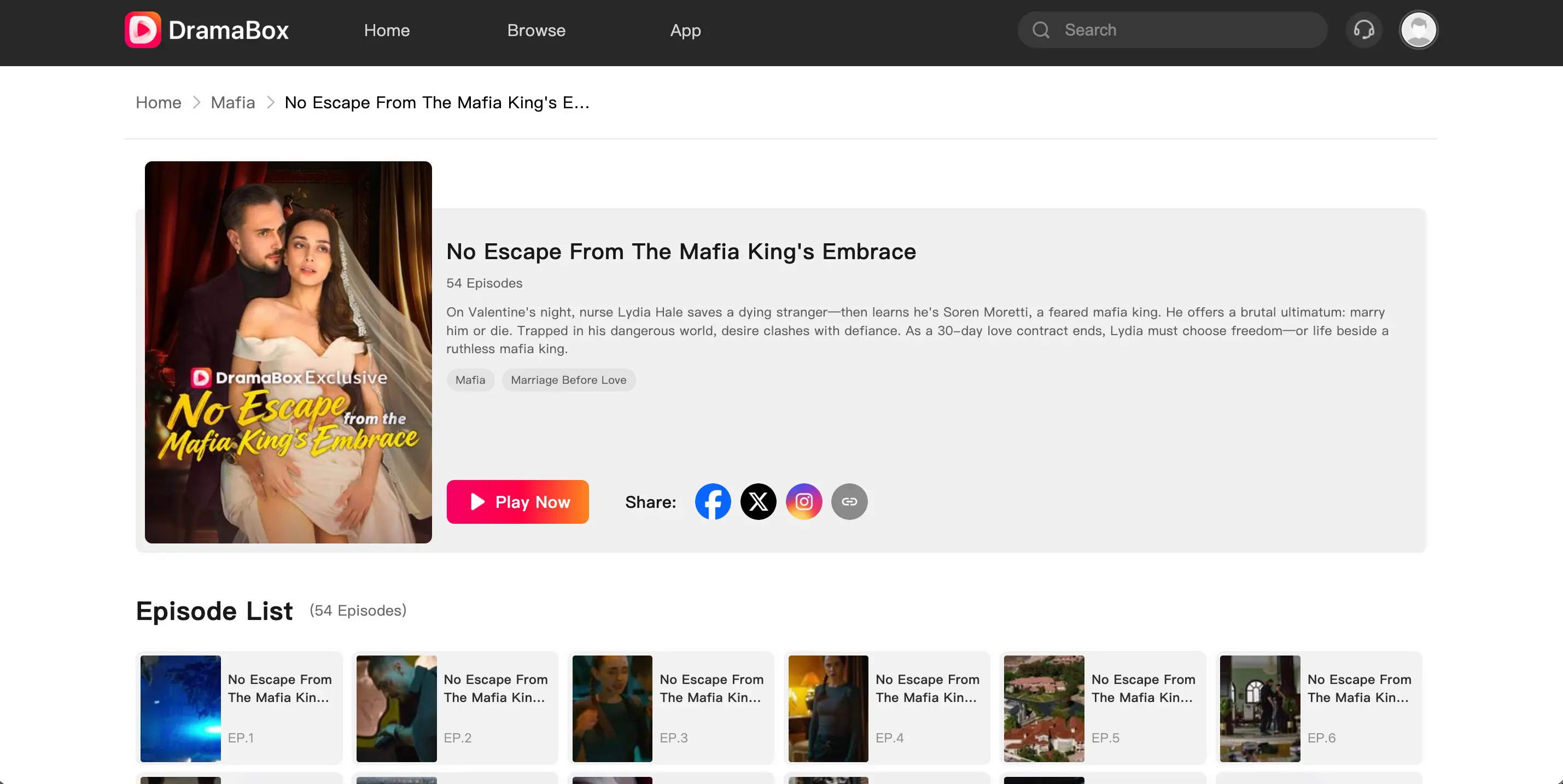
4. Vertical Streaming Platforms Are Investing in Original Content
To protect their user bases and lower acquisition costs, vertical streaming platforms are aggressively shifting their budgets toward original intellectual property (IP). Content evaluations by mobile market observers show that relying on licensed or derivative scripts is no longer enough to retain users in a crowded market.
Platforms are looking for exclusive serialized fiction that can anchor a viewer to their specific app. This shift requires:
Unique, proprietary story worlds that can sustain multiple seasons.
Strong, recognizable character brands that can be cross-monitored.
Predictable, highly efficient content pipelines that can deliver fresh episodes weekly.
Because platforms cannot scale production internally at this speed, they are forming deep partnerships with professional production studios that can deliver high-volume, studio-grade vertical series.
5. Data-Driven Storytelling Influences Production Decisions
In the short-form fiction industry, data does not just track performance — it directly writes the script. Every second of viewer interaction is analyzed to optimize upcoming content. Performance tracking blueprints from DataEye show that production companies analyze precise behavioral datasets, focusing heavily on:
Audience retention curves within the first 5 seconds of an episode.
Completion rate metrics for the entire series.
Episode drop-off points, identifying the exact plot lines that cause viewers to close the app.
If data shows that viewers drop off when a specific secondary character enters the frame, that character's screen time is cut in future episodes. Early test episodes are routinely launched to evaluate hooks, character dynamics, and pacing before the full production budget is unlocked. This ensures that creative decisions are backed by real-time user verification.
6. Localization and International Adaptation Are Growing
True localization goes far beyond generating subtitles or basic AI voice-overs. For a vertical series to succeed in a new market, it must undergo a complete cultural and structural translation.
The gap between translation strategies is vast. A basic translation relies on a simple text-for-text subtitle swap that almost always drives high user drop-off. True localization, however, requires a complete cultural adaptation of humor, localized slang to ensure maximum audience retention.
Even metadata, titles, and promotional hooks are customized for individual regions to ensure maximum click-through rates.
7. Genre-Driven Vertical Dramas Dominate
When it comes to vertical content, niche genres perform poorly. Mass-market, highly emotional genres dominate the charts because they trigger immediate engagement. Data from top streaming applications analyzed by Sensor Tower shows that the most profitable projects fall into highly specific narrative categories.
Top Performing Genres | Core Emotional Drivers | Target Audience Metric |
Romance & Billionaire Tropes | Wish-fulfillment, status shifts | High initial click-through rate |
Revenge & Betrayal | Justice, high emotional stakes | Maximum mid-series retention |
Suspense & Crime Thrillers | Curiosity, rapid pacing | Highest cliffhanger-to-unlock conversion |
Producers avoid ambiguous genres. Audiences must know exactly what emotional journey they are signing up for within the first few seconds of streaming.
8. Full-Cycle Production Studios Become More Important
As the market matures, platforms are abandoning fragmented workflows. Business logistics surveys in the digital video sector indicate that managing separate vendors for scriptwriting, casting, filming, and post-production introduces too much friction, drives up costs, and slows down delivery schedules.
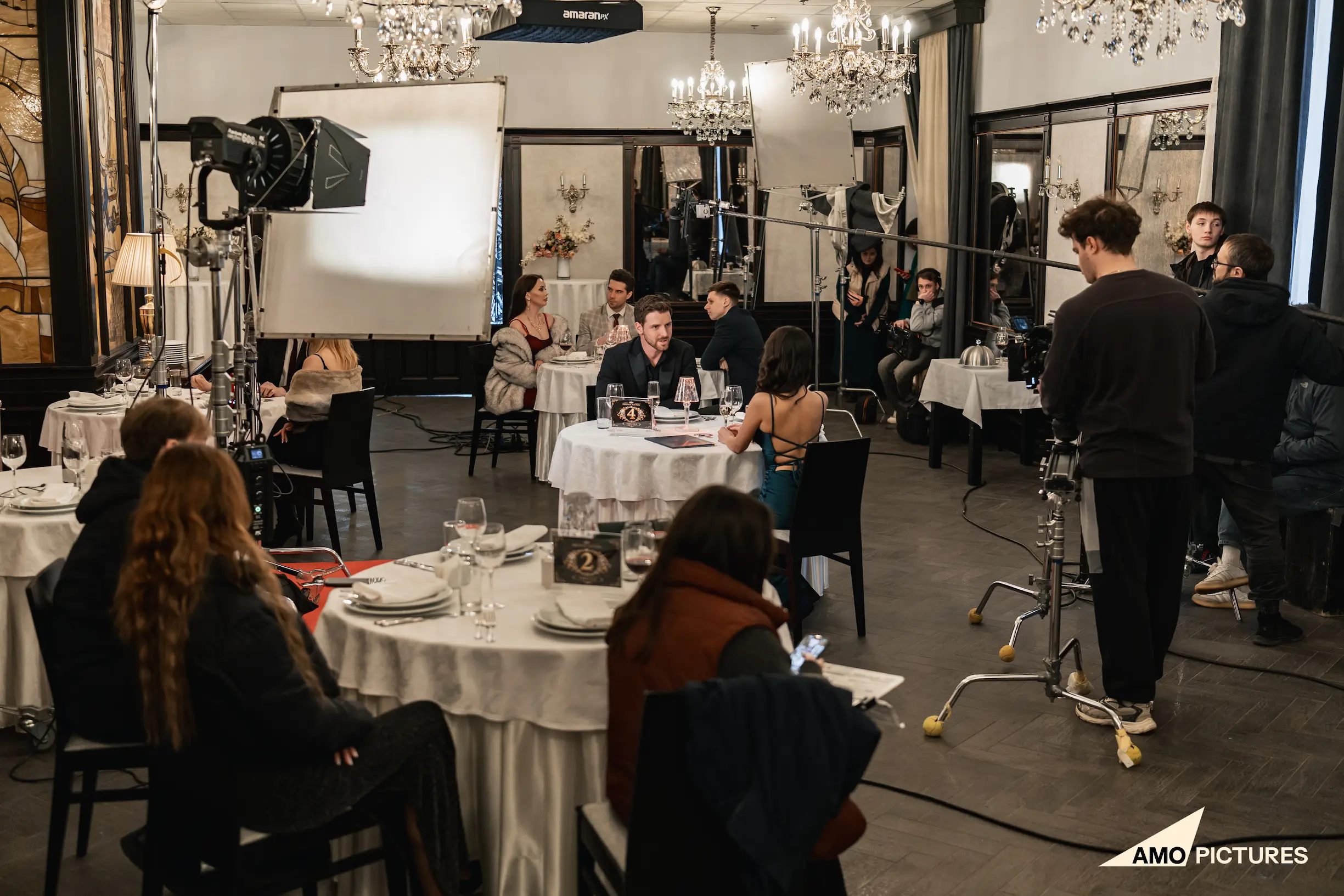
The industry is centralizing around full-cycle production studios that can manage the entire pipeline internally — from the initial concept development to final, platform-ready delivery. Platforms need partners who understand the unique structural rules of vertical content natively.
At AMO Pictures, we have built our infrastructure to solve this exact bottleneck. By handling development, localized casting, high-efficiency filming setups, and precise post-production under one roof, we eliminate delivery delays and maintain absolute quality control across every single episode frame.
9. Short-Form Fiction Is Moving Beyond Social Media
The era of viewing short fiction as "TikTok or YouTube content" is over. While social video channels remain valuable marketing engines for top-of-funnel discovery, app economy updates from DataEye confirm that the actual monetization and consumption have migrated to specialized platforms.
This transition allows for more complex, long-term narratives. These dedicated apps use sophisticated vertical drama monetization engines, combining ad-supported free tiers with pay-per-episode micro-transactions. This ecosystem gives creators the financial freedom to invest in professional talent, specialized gear, and elaborate set designs, lifting the entire medium out of the amateur content space.
10. AI and Production Technology Are Accelerating Workflows
Artificial intelligence is deeply integrated into the modern short-form workflow. Case studies from media technology journals confirm that AI in video production acts as a major speed multiplier for heavy backend logistics.
Producers utilize advanced software for automated multi-language subtitling, initial dialogue translation baselines, data-driven content analysis, and rapid production scheduling. AI tools help analyze massive scripts to identify pacing inconsistencies or optimize shooting schedules across multiple locations. Technology is used to eliminate technical bottlenecks, allowing creative production teams to deliver finished work to the market faster.
What These Trends Mean for Streaming Platforms and Producers
The rapid evolution of these short-form scripted content trends changes the requirements for anyone entering the mobile entertainment space. To remain competitive, your operational approach must change:
Build a Stable Content Pipeline. You cannot treat vertical series as occasional projects. Platforms require a continuous, predictable stream of fresh content to keep user churn low.
Design for Mobile-Native Mechanics. If your team is still thinking in terms of traditional TV layouts or widescreen framing, your content will fail on the phone. Every creative choice must be mobile-native.
Prioritize Speed and Scale. The time from script approval to platform launch must be measured in weeks, not months. The ability to test concepts rapidly and scale winning formulas determines market survival.
Plan for Localization Early. Do not think about international adaptation during post-production. Build your scripts, character archetypes, and formatting with global distribution in mind from day one.
How AMO Pictures Approaches Vertical Drama Production
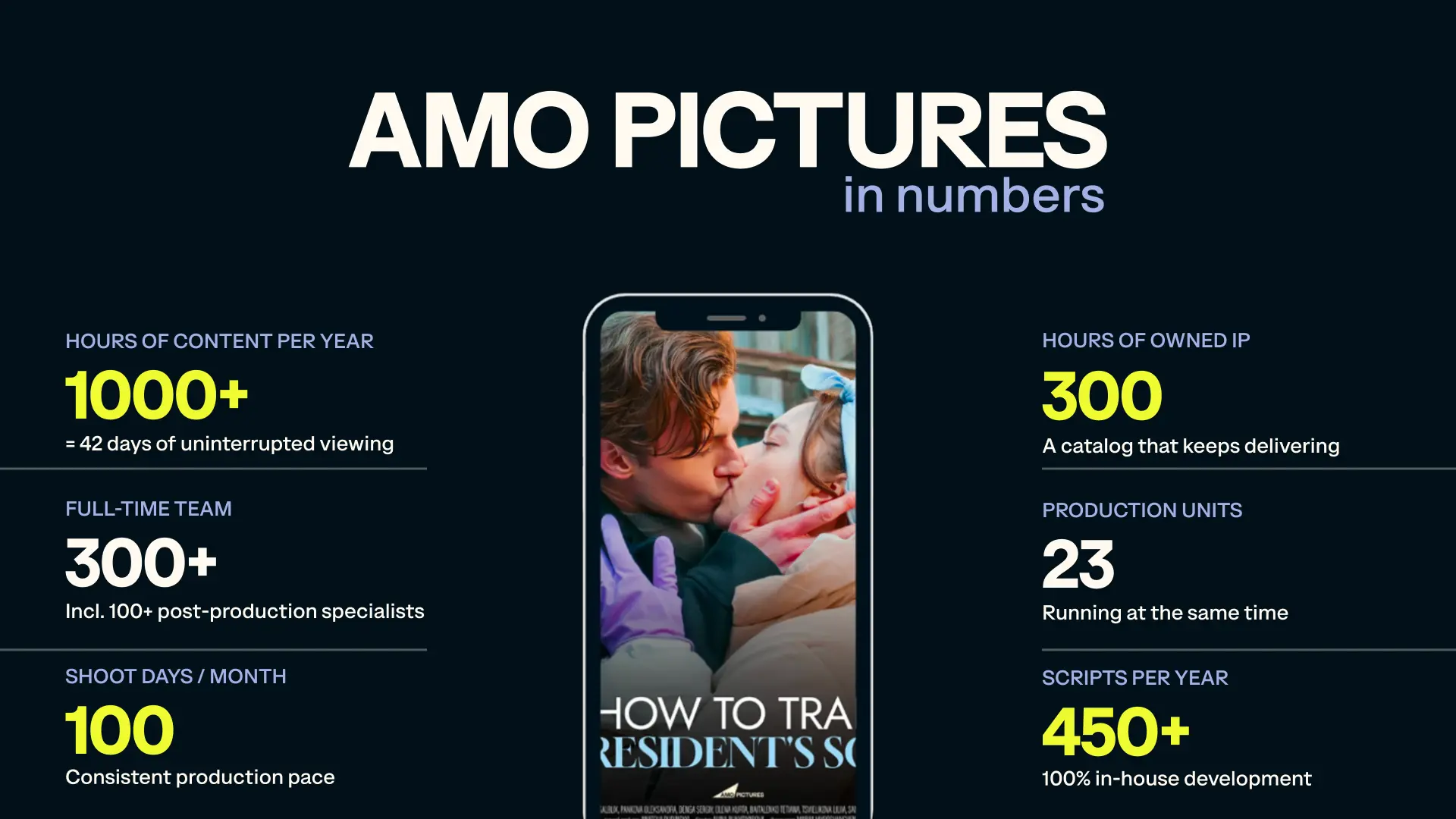
At AMO Pictures, we don't just follow vertical drama trends — we design the systems that power them. We build premium, mobile-first series and short-form scripted video tailored for global audiences who demand high-impact storytelling directly on their smartphones.
We have eliminated the fragmentation that slows down traditional production. Our teams operate a fully integrated, full-cycle pipeline optimized specifically for the unique demands of the 9:16 frame:
Concept & Script Development. We build high-density, hook-driven storytelling structures designed to capture attention within 3 seconds and sustain high retention across 80+ episodes.
Mobile-Native Directing & Filming. Our production crews utilize specialized camera layouts and lighting setups designed purely for vertical composition, close-up emotional delivery, and high-pace narrative action.
Targeted Casting. We source professional talent capable of delivering powerful, nuanced performances that translate effectively to the intimacy of a smartphone screen.
Data-Informed Post-Production & Delivery. We edit for rhythm, tension, and rapid pacing, delivering technical assets that seamlessly fit the strict integration and formatting specifications of top vertical streaming platforms.
We treat vertical fiction as a precise, premium art form. We combine creative experimentation with industrial efficiency to help digital platforms scale their libraries, and maximize user monetization.
Explore our work and partner with us on our Vertical Drama Production page.
The explosive expansion of the vertical drama trends ecosystem, backed by analytical metrics from Sensor Tower and eMarketer, proves that short-form episodic fiction is no longer a temporary social media phenomenon. It is an independent, permanent production category with its own strict structural rules, creative requirements, and monetization pathways.
FAQ
What are the biggest trends in vertical drama?
The most significant trends include the absolute dominance of mobile-first storytelling designed natively for the 9:16 frame, the reduction of episode lengths to 60-90 seconds driven by high-density conflict, and the massive shift toward original IP funded directly by premium vertical streaming platforms.
Why is vertical drama becoming popular?
It perfectly aligns with modern mobile viewing behavior. Audience data published by eMarketer and UXmatters indicates that viewers prefer content that fits into short daily micro-sessions without needing to rotate their smartphones. Additionally, the micro-transaction model lets viewers pay small amounts to instantly unlock cliffhangers, making it highly accessible.
What is the future of short-form fiction?
The format is evolving into a highly professionalized, studio-backed entertainment sector. The future of vertical drama lies in premium production values, sophisticated data-driven script adjustments, and highly coordinated global localization strategies that move beyond amateur social media clips.
What platforms distribute vertical drama series?
The primary distribution channels are specialized, premium mobile drama apps such as ReelShort, DramaBox, ShortTV, and MyDrama, which utilize independent monetization models separate from traditional social media networks.
How long are vertical drama episodes?
Standard episodes run between 60 to 90 seconds. This length is specifically optimized to deliver a single, high-stakes narrative beat followed immediately by a powerful cliffhanger to keep the viewer moving through the series.
What makes a vertical drama successful?
Success requires an aggressive opening hook within the first 3 seconds, a highly visual narrative language dominated by close-ups, clear emotional stakes (such as revenge or high romance), and a reliable, data-tested release cadence.
How can streaming platforms produce vertical drama content?
Platforms succeed by partnering with full-cycle production companies like AMO Pictures. This approach allows them to outsource everything from script development and casting to filming and final formatting, ensuring a fast, scalable, and high-quality content pipeline.
Share