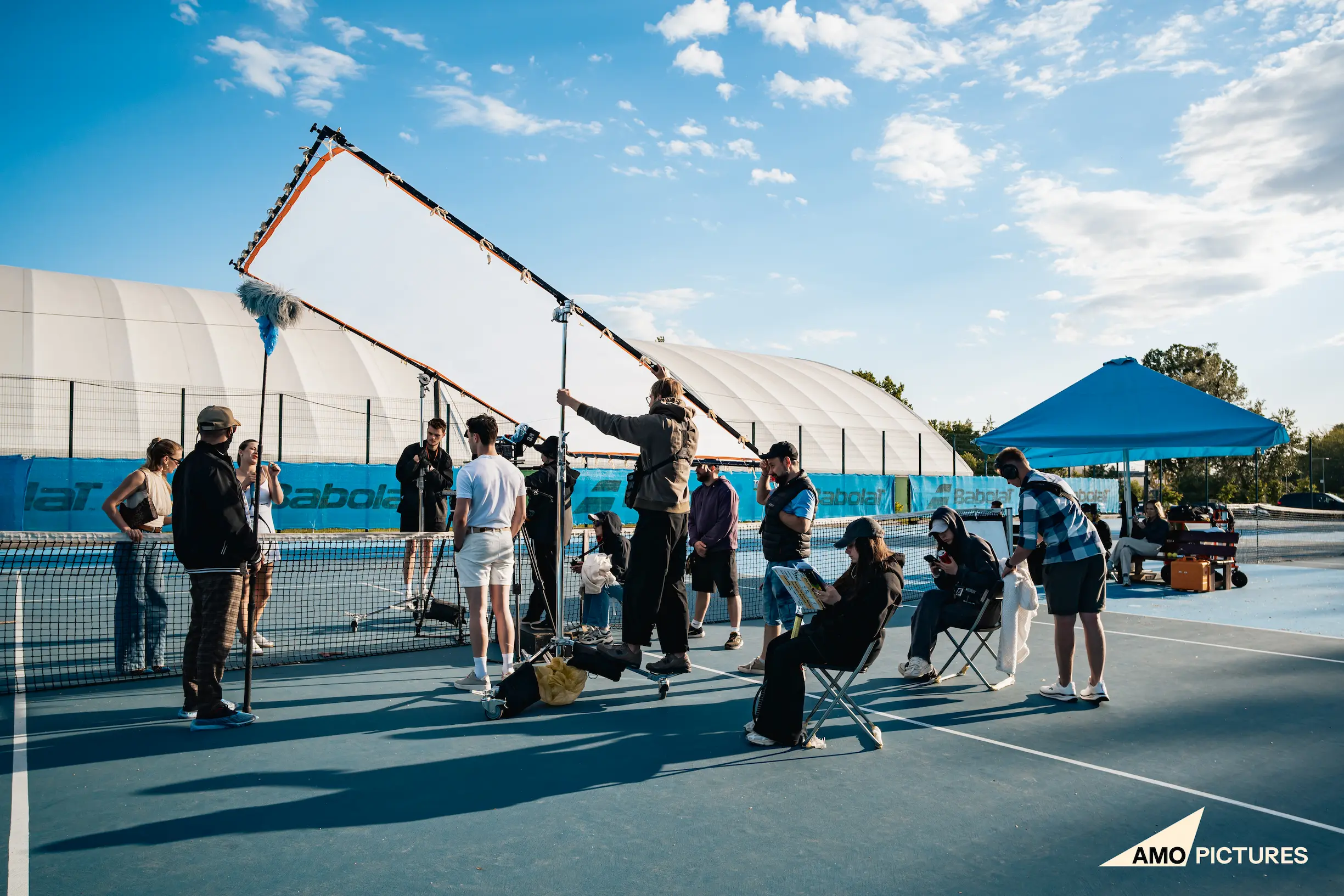
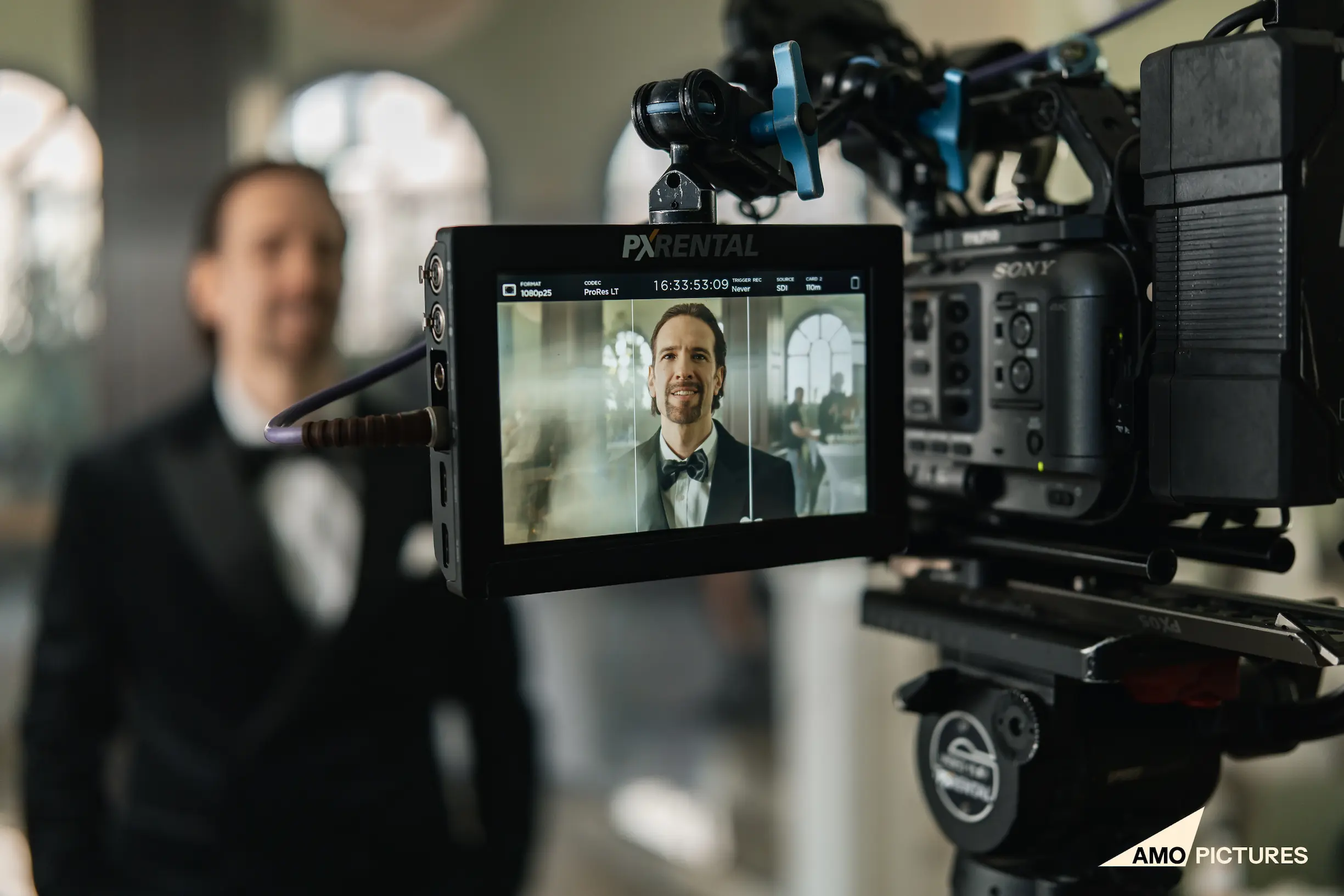
As smartphones became the primary screen for entertainment, production teams had to rethink how stories are written, filmed, and edited. It is no longer about forcing people to turn their devices sideways to watch a show. It is about building professional fiction that fits how audiences naturally live and hold their phones.
This shift has created a highly specialized industry: short-form drama production. We are not talking about casual social media clips or user-generated content. A modern short-form series requires the same narrative depth as traditional television, but compressed into standalone, high-impact episodes designed specifically for portrait screens.
At AMO Pictures, we transitioned from social video formats to global streaming content by treating the 9:16 screen not as a limitation, but as a completely new creative canvas. Here is a look behind the scenes at how a professional vertical drama production process works from the first script draft to millions of mobile views.
Quick Answer: How a Vertical Series is Built
To build a vertical series that people actually like, you have to change your approach at every stage of the pipeline. Here is how a raw script becomes a mobile hit:
Concept Development. Choosing high-stakes, universally relatable tropes that hook a viewer instantly.
Scriptwriting. Stripping out slow exposition to deliver complete, 90-second episodic arcs.
Casting. Finding actors whose facial expressions and eyes can carry a scene in tight close-ups.
Pre-Production. Mapping out tight schedules to handle high-volume shoots without budget delays.
Filming. Stacking characters along the depth axis and adjusting to native 9:16 filming geometry.
Post-Production. Cutting for the "thumb pace" and isolating dialogue for clear mobile playback.
Platform Delivery. Formatting files so app interfaces never block the onscreen action.
To see how our studio handles these steps at scale, explore our dedicated breakdown of Vertical Drama Production capabilities.
What Makes Vertical Drama Production Different?
Traditional cinema happens in a dark room where you have a captive audience for two hours. Vertical dramas happen on the subway, during lunch breaks, or while waiting in line for a coffee. On a smartphone, your content is always competing with a text notification, an Instagram tag, or a low-battery warning. If you do not give the viewer a reason to stay within the first three seconds, they swipe up and disappear.
This physical reality changes the shape of the frame. Horizontal filmmaking uses peripheral space to build a world — think of wide desert landscapes or two characters sitting on opposite sides of a long couch. In mobile-first drama production, you do not have width; you have height. Ceilings, floors, and foreground objects matter far more than what is happening on the left or right edges of the screen. The entire format is built around human proximity and immediate emotional contact.
The 7 Steps of Professional Vertical Drama Production
Step 1. Concept Development
Let’s start with a practical problem: if a story takes ten minutes to explain why a character wants revenge, it will fail on mobile. During concept development, we look for premises that hit the viewer instantly. We focus on intense, deeply rooted human conflicts — betrayal, secret wealth, forbidden romance, or family rivalries.
Instead of guessing what might work, we look at actual viewing behavior across our global distribution channels. If a concept cannot be summarized in one sharp, high-stakes hook, we discard it.
Step 2. Scriptwriting for Short Episodes
Writers transitioning into scripted vertical content production have to throw out the traditional three-act structure. When an individual episode lasts only 60 to 120 seconds, you cannot waste time on slow establishing shots or poetic, subtext-heavy dialogue.
Characters must say exactly what they mean and act with immediate consequence. Every single episode functions as an independent narrative block: it opens with a mini-hook to prevent the user from swiping away, drives a specific conflict to a boiling point, and cuts exactly at a massive cliffhanger.
Step 3. Casting for the Close-Up
Look at your phone screen right now. A vertical frame leaves almost no room for wide physical environments or large groups of people. The actor's face completely dominates the space. Because of this, traditional theatrical acting or broad body movements can look cartoonish and fake on a smartphone.
During casting, we look for talent who can project intense, raw emotions through subtle micro-expressions and eye movements. The performance must feel completely intimate and immediate. Since finding actors who understand this specific format is an ongoing industry challenge, we launched our own in-house talent agency. We scout, test, and train actors specifically to work within the tight technical boundaries of 9:16 framing.
Step 4. Pre-Production and Tight Scheduling
Moving fast requires absolute precision. If a film crew gets stuck on set for two hours because a location isn’t ready or a prop went missing, it burns through the project budget immediately. To prevent this, our teams lock down locations, wardrobe, and technical requirements weeks before day one.
This deep preparation means that if something goes wrong, our team can pivot the entire schedule in minutes and adjust without losing money.
Step 5. Filming in 9:16 Format
Physical production requires completely different camera mechanics. During 9:16 filming, our crews use specialized vertical camera rigs and specific lenses that keep the edges of the narrow frame perfectly sharp without distorting the picture.
This completely changes our mobile-first framing and character blocking:
Depth Stacking. Instead of placing two actors side-by-side, we position them along the Z-axis. One character stands right in front of the lens, while the second character stays in the background, keeping both faces visible within the tall, narrow frame.
Vertical Camera Movement. We swap traditional left-to-right panning shots for vertical tilts, overhead jib moves, or dynamic tracking shots that follow an actor’s vertical motion.
Step 6. Editing and Post-Production
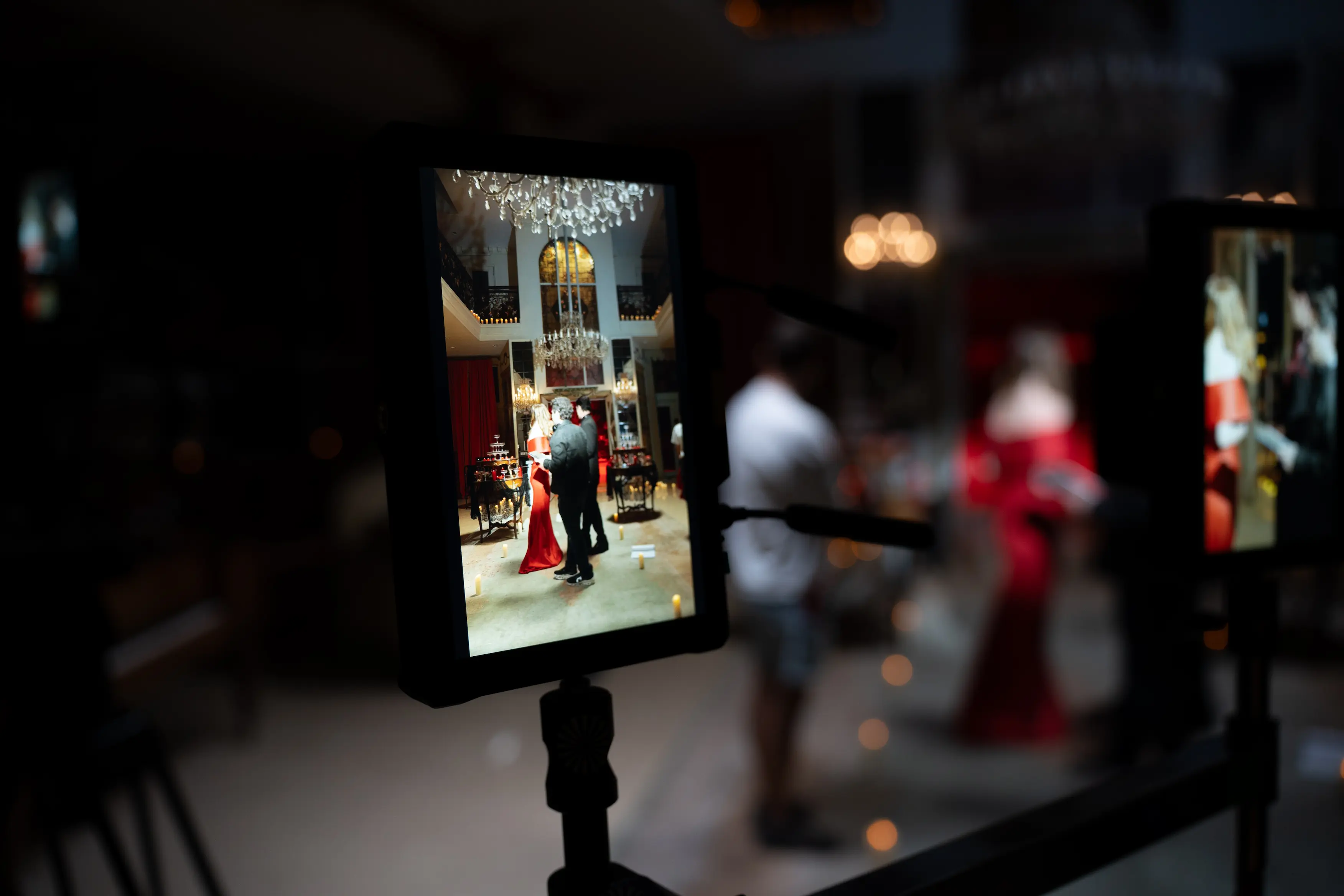
Once the raw footage is shot, it goes straight to our in-house editors, who cut for what we call the "thumb pace." We eliminate dead frames, empty pauses, and slow transitions. If a character walks from their car to an office door, we don't show the walk — we cut directly to the door opening.
Sound design is equally critical during post-production. A huge portion of our audience watches a short-form series on public transit, using cheap phone speakers or wireless earbuds. Our audio engineers isolate the dialogue track to make it perfectly crisp and clear over ambient noise. We also place specific music drops and audio accents exactly at the episode's closing cliffhanger to maximize the emotional impact and encourage the viewer to tap the next episode.
Step 7. Platform Adaptation and Delivery
The final phase of production focuses on preparing the finished episodes for distribution. During the final cut, our teams tailor individual scenes to ensure they meet both the core script requirements and the compliance standards of the mobile delivery platforms.
Technical Overview: The Vertical Production Lifecycle
The matrix below maps out how each phase of production translates into actual viewer engagement on mobile screens.
Stage | What Happens | Why It Matters | Production Priority |
Concept | Choosing core tropes and checking ideas against historical audience data. | Guarantees the story has immediate market appeal and clear conflict. | Cutting out slow, complicated backstories in favor of direct hooks. |
Scriptwriting | Drafting short, rapid episodes that end on structural cliffhangers. | Keeps retention high and prevents the user from swiping away from the show. | Ensuring a major narrative turning point occurs every 60 to 90 seconds. |
Casting | Auditioning talent with a heavy focus on facial micro-expressions. | Establishes an intimate, believable emotional connection on a small screen. | Testing how well an actor can project tension or panic in tight close-ups. |
Filming | Capturing scenes using custom vertical camera configurations. | Native optimization for standard modern smartphone displays. | Using depth-based character blocking and overhead lighting setups. |
Post-Production | Tight, fast-paced video editing and high-clarity mobile audio mixing. | Sustains storytelling momentum and ensures clear dialogue on phone hardware. | Eliminating dead frames and adding sharp audio cues at the cliffhanger. |
Delivery | Exporting master files that comply with app safe-zone overlays. | Prevents critical action or subtitles from being blocked by app buttons. | Customizing file formats and metadata for targeted streaming networks. |
How AMO Pictures Scales Vertical Content
In 2025, AMO Pictures produced 85 vertical series. Managing that volume required a production system capable of coordinating scripts, casting, filming schedules, and post-production across dozens of projects simultaneously. We operate as a highly systemized, data-driven production studio.
Our engine is built for global scale:
Global Reach: Our content is distributed across 55 countries, supported by a network of over 60 million subscribers.
High-Volume Output: We operate 23 shooting units. Our pipeline for 2026 is scaling up to deliver 140 new vertical series.
Automated Coordination: To eliminate bottlenecks, our entire workflow is integrated into AMO_OS. From the moment a script is written, the software coordinates scene scheduling based on cast availability, tracks continuity, and monitors daily budgets across all active sets.
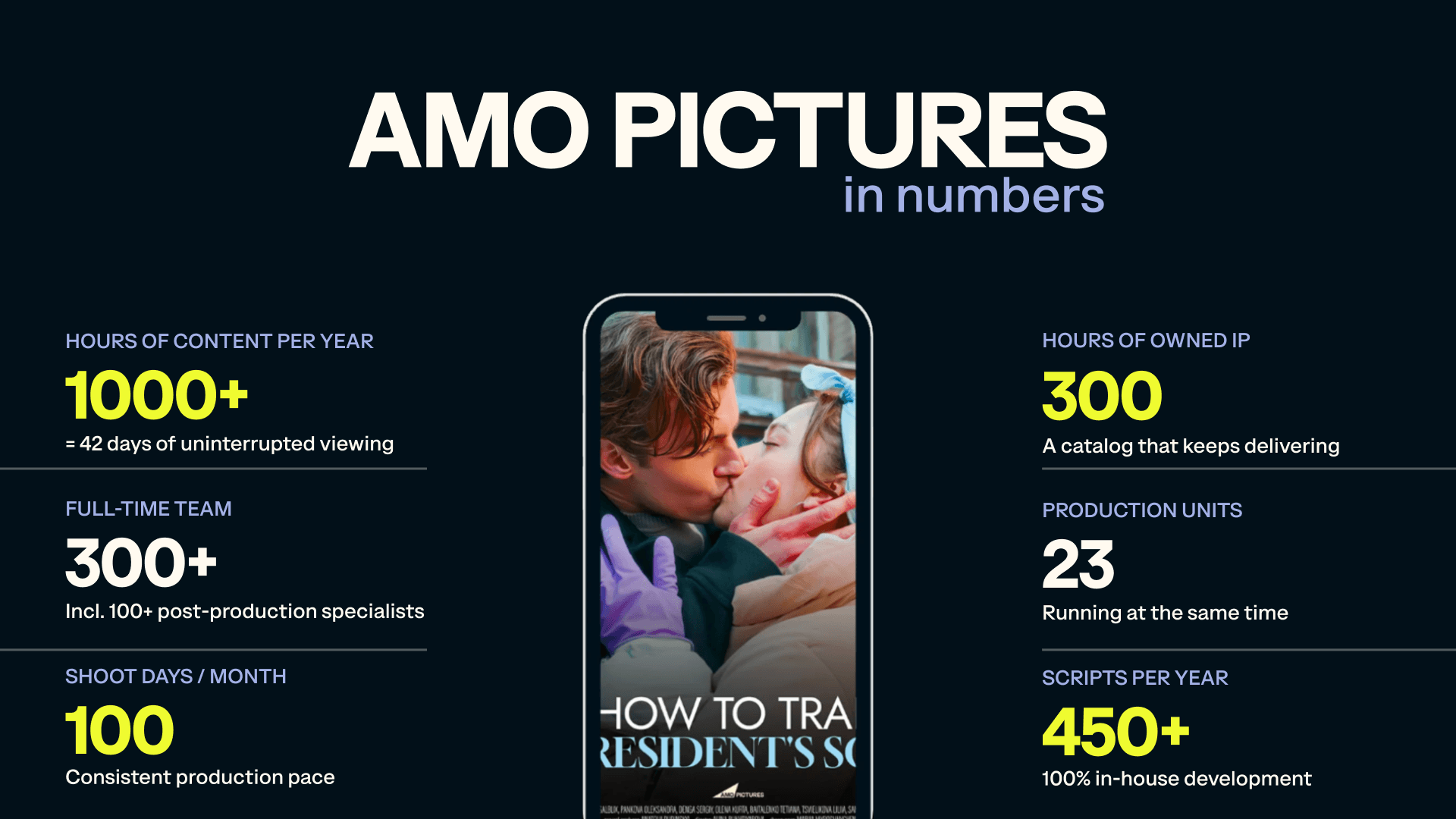
By controlling both the physical production pipeline and analyzing real-time viewer data from our distribution networks, we ensure our series deliver high production values on predictable, industrial timelines.
Whether you are a platform looking for high-retention licensed content or a distributor looking to expand your pipeline with a battle-tested partner, check out our Vertical Drama Production services to see how we can scale your metrics together.
FAQ
How does a vertical drama differ from standard short-form social video?
Social videos on platforms like TikTok or Instagram Reels are typically unscripted, user-generated, or built around passing viral trends. A vertical drama is professionally produced, fully scripted fiction. It utilizes trained actors, professional camera crews, dedicated directors, and complex storytelling divided across dozens of continuous episodes.
How long does it take to film an entire season of a vertical series?
Because our workflows are highly optimized, a standard 80-episode season of a vertical drama is typically filmed over a compressed schedule of 5 to 7 days. This speed requires absolute precision during pre-production, ensuring every location, prop, and cast member is ready before day one.
Why does vertical filming place so much emphasis on close-ups?
The narrow 9:16 aspect ratio does not leave room for wide physical environments or multiple characters standing next to each other. Close-ups naturally fill the portrait frame, allowing the mobile viewer to connect directly with the characters' eyes and raw facial expressions.
What monetization models do vertical drama platforms use?
Most dedicated vertical streaming networks use a pay-per-episode or coin-unlock model. Audiences watch the first 5 to 10 episodes completely free to get hooked on the story. To unlock subsequent episodes, they must watch targeted advertisements or purchase digital coins through in-app transactions.
How do writers handle pacing when an episode is only 90 seconds long?
Writers cut out all traditional subplots, slow introductions, and filler dialogue. The script introduces the primary conflict within the opening ten seconds, drives the action to a high-stakes turning point, and cuts the scene exactly at a cliffhanger to make the user want to unlock the next part.
Can you just crop a traditional horizontal movie into a vertical drama?
Simply cropping horizontal footage results in poor visual framing and low quality. Characters frequently fall out of the safe zone, and background elements look distorted. True vertical drama requires native 9:16 filming, specialized lens selections, and depth-based character blocking designed from day one.
Share